The Function of “Aql”: Reasoning as a Dynamic Process
In the Quranic lexicon, the root word for intellect or reason (Aql عقل) is never mentioned as a stationary noun. Instead, it appears 49 times exclusively as a verb (e.g., Ya’qiloon يعقلون — “they reason”). This suggests that “reasoning” in the Quranic perspective is not a fixed trait, but a dynamic, functional process.
Crucially, the Quran identifies the heart as the primary organ responsible for this cognitive action:
“…so that they may have hearts by which to reason…قُلُوبٌ يَعْقِلُونَ بِهَا“ (Surah Al-Hajj, 46).
To eliminate any ambiguity that “heart” might only refer to a metaphorical soul, the verse continues with surgical precision:
“…The fact is that it is not the eyes that are blinded, but what turns blind is the hearts contained in the chests.“ (Surah Al-Hajj, 46).
Note on Translation: In this article, the word Sudur (صدور) is translated as “chests.” While many traditional English translations use the word “breasts,” “chests” is the more accurate modern rendering. It correctly identifies the anatomical thoracic region where the heart is located, ensuring the scientific and linguistic context is clear for all readers.
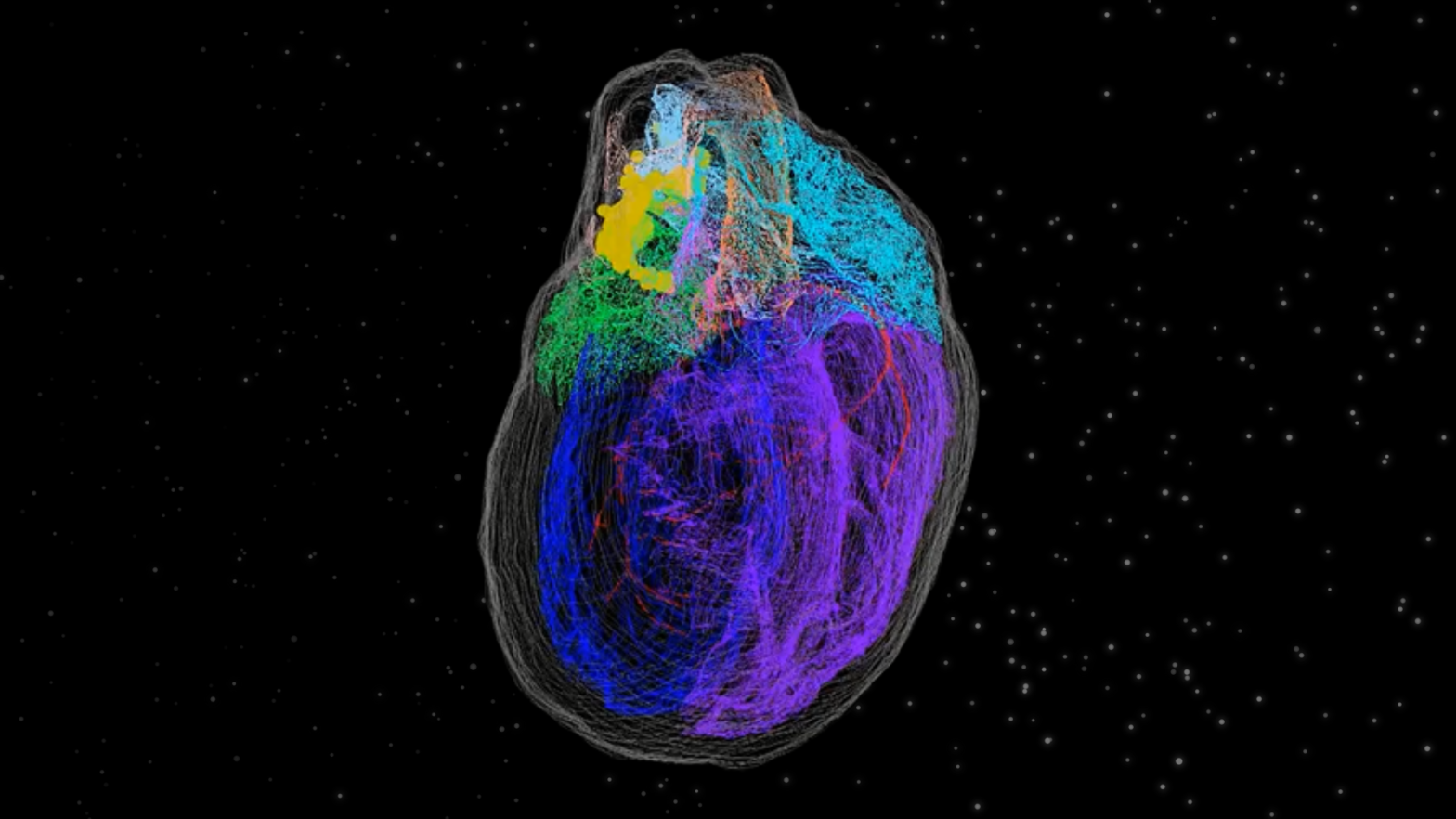
The Discovery of the “Little Brain in the Heart”
For decades, the scientific world viewed the heart as a simple mechanical pump. However, the field of Neurocardiology has uncovered a much more complex reality.
In 1991, Dr. J. Andrew Armour published a ground breaking research revealing that the heart has its own sophisticated nervous system, often called the “Small Mammalian Heart Brain.”
:Key Scientific Facts
Functional Independence: The heart can learn, remember, and even make functional decisions independently of the cranial brain.
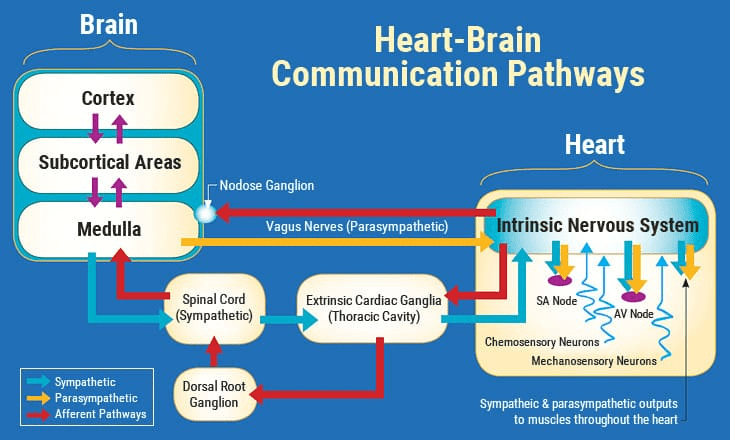
Bidirectional Dialogue: The heart doesn’t just “take orders” from the head. It sends more signals to the brain than it receives, specifically influencing the areas responsible for emotional processing and higher cognitive reasoning (the amygdala and cortex).
Biological Reasoning: The heart’s information processing directly affects how we perceive the world and make decisions — a biological embodiment of “reasoning.”
The Neural Network: The heart contains approximately 40,000 sensory neurites (neurons). This network is so complex it can operate independently of the cranial brain.
Memory and Learning: These neurons allow the heart to learn, remember, and perceive. It processes information and makes “sensory decisions” before sending signals to the brain.
The Heart-to-Brain Signal: The heart sends significantly more information to the brain than it receives. These signals go directly to the centers of the brain that handle reasoning, emotion, and logic.
Bridging Revelation and Science
The Quranic description of “hearts in the chests” that “reason” aligns with remarkable precision with these neurocardiological findings
| The Quranic Text | Scientific Reality |
| Reasoning (Ya’qiloon) as a Verb “Hearts that reason” | Active Information Processing in the cardiac nervous system |
| “Hearts in the Chests” | There are 40,000 neurons physically located in the protective outer layer of the heart wall |
| “Blindness of the Heart” | Desynchronization between the heart’s neural signals and the brain’s cognitive centers |
Conclusion: A Deeper Level of Perception
Science now confirms that the heart is a sensory organ and a sophisticated center for receiving and processing information. When the Quran speaks of the “hearts in the chests” being the seat of understanding, it is inviting us to look at our biology and our spirituality as one cohesive truth.
Does this change how you think about your “heartfelt” decisions? If the heart can reason and remember, then “following your heart” may be a more scientific act than we ever imagined.
Written by: Hussein Ahmed Kattab
References: Dr. J. Andrew Armour (1991), “Anatomy and Function of the Intrathoracic Neurons.”
The Mysteries of the Heart Infographic
 موقع فصّلت لـ الاعجاز العلمي في القرآن الكريم وبالحقائق العلمية